
When You Trade a Week of Emails for a Week in the Ugandan Wilderness?
October 28, 2026
Kidepo Valley: Is Uganda’s Remote Wilderness Right for Your Next Adventure?
October 28, 2026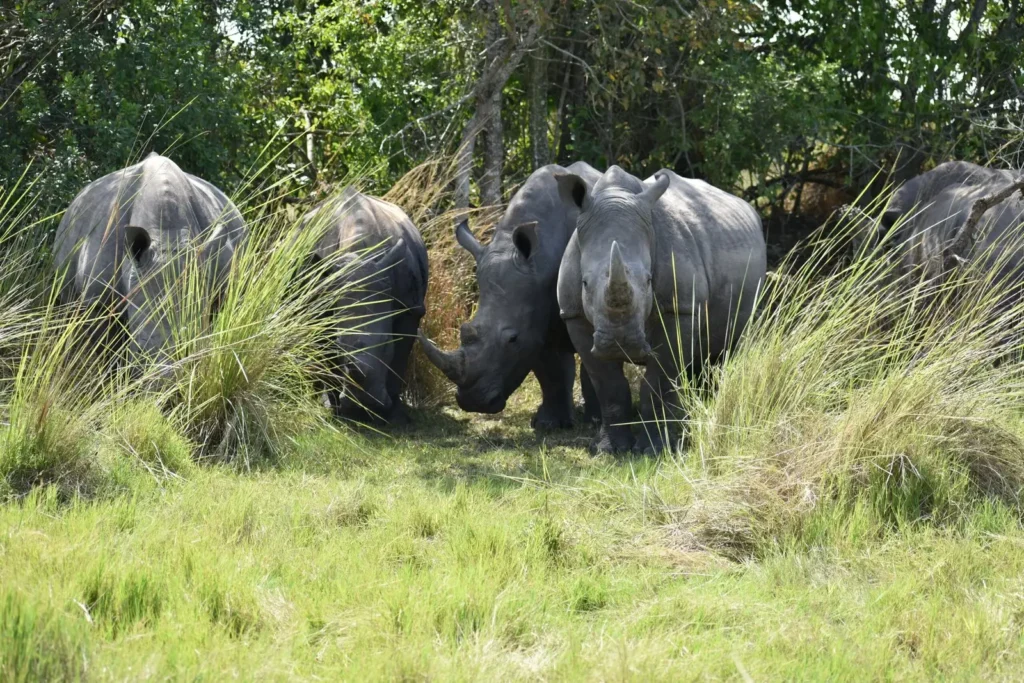
A Journey Through Uganda’s National Parks.
Somewhere past the equator monument, with a roadside fruit seller waving a bunch of sweet bananas through your window, you realise something: the safari has already begun. You haven’t seen a lion yet. You haven’t tracked a gorilla. But the red earth, the terraced hills, the boda-boda riders threading through villages, and the sudden flash of a grey crowned crane in a wetland beside the road have already told you that Uganda doesn’t do boring transfers.
Most travellers plan a Uganda safari by listing the parks: Murchison Falls, Kibale, Queen Elizabeth, Bwindi. What they don’t realise is that the stretches between those names are some of the most memorable parts of the trip. At Otter African Safaris, we design routes so the road itself becomes part of the story.
Why Uganda’s Drives Feel Different?
In many safari destinations, you fly between parks in small planes and see little in between. Uganda rewards those who go overland. The country is compact, green, and astonishingly varied, so a single day’s drive can carry you from papyrus swamps to tea estates to volcanic crater lakes. Roads are generally good on the main safari circuits, and your private guide-driver knows exactly where to slow down, where to stop, and where the best samosas are sold.
Think of it less as a commute and more as the connecting chapters of a book you can’t put down.
Chapter One: Kampala to Murchison Falls
Heading north from Kampala or Entebbe, the city fades into farmland, and the road becomes a ribbon through forest edges and small trading towns. Many itineraries pause at the Ziwa Rhino Sanctuary, where you can walk on foot within meters of southern white rhinos, the only place in Uganda to see them in the wild. It’s a perfect warm-up and a fitting reminder that conservation here is a living, ongoing story.
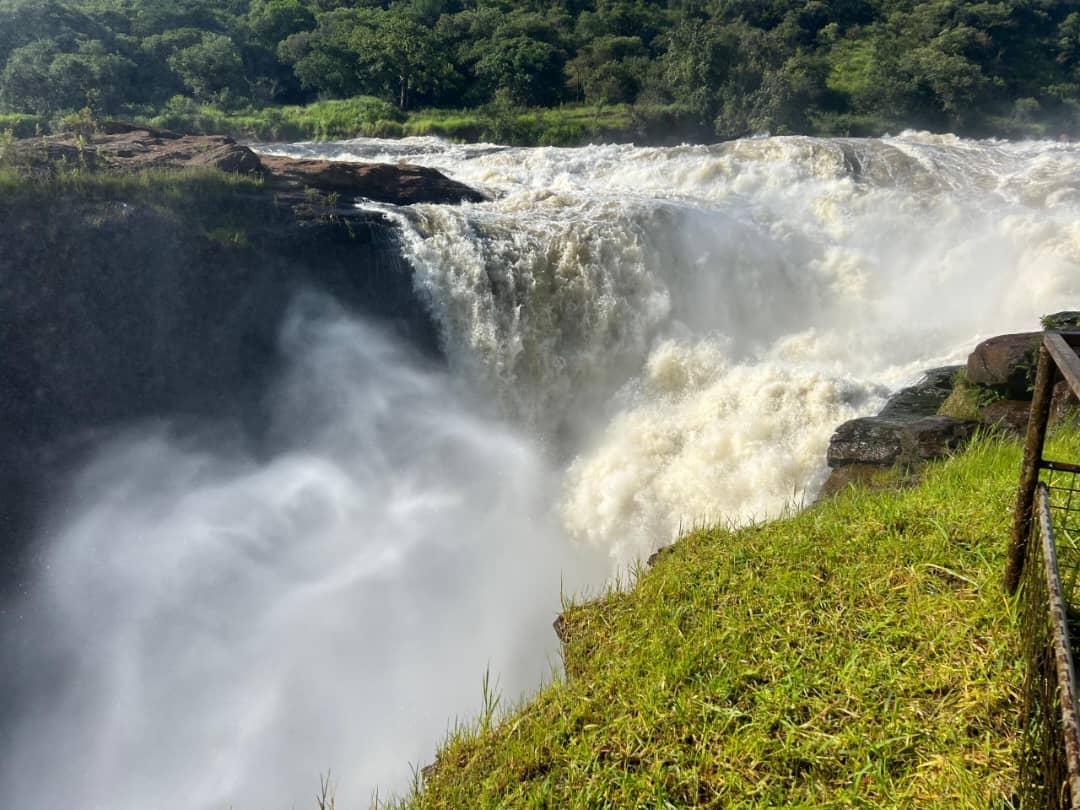
Push on to Murchison Falls National Park and the landscape opens into rolling savannah, with the Nile squeezing through a rocky gap so narrow and violent that the whole earth seems to hum. Even the ferry crossing at the Nile, with elephants sometimes watching from the bank, feels like a scene staged just for you.
Chapter Two: Into the Hills of Fort Portal and Kibale
Travel west, and the air cools, the hills grow steeper, and the tea plantations begin. Around Fort Portal, emerald rows of tea roll over the slopes like green corduroy, and the town’s crater lakes sit hidden in the hills, still and shockingly blue. This region is a favourite for photographers, and our guides never rush it.
Then comes Kibale Forest, often called the primate capital of the world. Chimpanzee tracking here is one of Uganda’s signature experiences, and arriving relaxed after a scenic drive makes the early-morning trek all the sweeter. Between the forest and the town, the Bigodi Wetland Sanctuary offers a gentle community-led walk that rewards you with monkeys, bright birdlife, and warm conversation with local guides.
Chapter Three: Queen Elizabeth and the Road to Ishasha
South of Kibale, you roll into the shadow of the Rwenzori Mountains, the legendary “Mountains of the Moon.” On a clear morning, their snow-dusted peaks appear above the haze, a sight that stops conversation in the vehicle. Queen Elizabeth National Park follows, with its Kazinga Channel boat cruise, where hippos, buffalo, and elephants line the banks like an audience at a riverside theatre.
The journey south through the Ishasha sector is where Uganda springs one of its best surprises: tree-climbing lions. Resting in the branches of fig trees in the heat of the day, they are unforgettable, and they appear right on the road to Bwindi. Few routes in Africa reward the journey this literally.
Chapter Four: The Switchback Finale to Bwindi
If the earlier drives are gentle chapters, the approach to Bwindi Impenetrable Forest is the dramatic climax. The road winds up and down through steep, intensely farmed hills, with terraces carved into every slope and mist pooling in the valleys below. Around Kabale and Lake Bunyonyi, the scenery is so postcard-perfect that the region has been nicknamed the “Switzerland of Africa.” Many travellers spend a night here, paddling a dugout canoe across the calm, island-dotted lake before heading into the forest for gorilla trekking.
It’s a slower, more physical kind of road, and it’s exactly why the gorillas feel so hard-won and so deserved.
The Little Moments You Can’t Book Separately
The magic of overland travel is in everything the brochure forgot to mention. The kids run to the side of the road to wave. Eaten hot from a roadside stand, it’s the rolex, the popular egg-and-chapati street food in Uganda. A woman tells you about her grandmother’s town while weaving a basket at the artisan fair.
How Otter African Safaris Makes the Drive Effortless
A great overland safari takes planning. Distances in Uganda can look short on a map but take longer than expected, so we balance driving days with rest, build in scenic stops, and match each route to your pace and interests. Our experienced driver-guides handle the logistics, share local knowledge, and spot wildlife long before you do, while you sit back in a comfortable 4×4 with a window seat to the show.
We also tailor every itinerary. Prefer fewer long drives? We can combine overland legs with short domestic flights. Travelling with family? We’ll plan relaxed stops that keep everyone happy. Dreaming of a honeymoon through the hills? We know the lodges with the best views.
Start Your Story on the Road
Uganda’s national parks are extraordinary, but the road that links them might be the part you remember most.
Ready to plan your Uganda journey? Contact Otter African Safaris today, and let’s build an itinerary where every mile is part of the adventure. Call 0773932802 or 0773945555.
