
Conservation vs. Poaching The Silent Battle You Can Join
August 13, 2025
The African Big Five Top Questions with Otter African Safaris
August 22, 2025
A Living Water Gateway
If you’re dreaming of a safari moment that blends big-game drama with serene, cinematic views, put the Kazinga Channel at the top of your list. Threading through Queen Elizabeth National Park, this 32-kilometre natural waterway links Lake George to Lake Edward and concentrates an astonishing amount of wildlife along its banks. From hippo pods stacked like boulders to elephant families wading in for a drink, the channel is one of East Africa’s easiest places to see many species close, unhurried, and eye-level from the water.
As Otter African Safaris, we’ve guided countless travellers along these waters. Here’s your complete, practical guide to getting the most from a Kazinga Channel experience.
Where Is the Kazinga Channel and Why It’s Special
- Location: Western Uganda, inside Queen Elizabeth National Park (QENP), roughly a 6–7 hour drive from Entebbe/Kampala, or a short flight to nearby airstrips with a road transfer.
- What it is: A slow-moving channel regulated by the natural inflow/outflow of Lake George and Lake Edward. The geography funnels wildlife to a dependable water source year-round, making sightings remarkably reliable.
- The vantage point: Boat safaris keep you at a non-threatening distance and low angle, ideal for photography and behaviour watching without disturbing animals.
Wildlife Highlights You Can Expect
Aquatic stars
- Hippos in large numbers are often the densest concentrations you’ll see anywhere.
- Nile crocodiles bask along mud banks, occasionally sliding into the water with barely a ripple.
Heavyweights on the shore
- Elephants and buffalo frequently come to drink, bathe, and cross the channel.
- Warthog, waterbuck, and bushbuck are common along the reeds.
- Predators such as lions may be seen in the surrounding plains; sightings right at the water are less frequent but always possible.
Birding paradise
- Over 600 bird species occur in QENP, and the channel is a hot spot. Look for African fish eagle, pied kingfisher, malachite kingfisher, saddle-billed stork, yellow-billed stork, great white and pink-backed pelicans, goliath heron, African skimmer, and flocks of lapwings, terns, and egrets. Seasonal movements can add surprises, bring your checklist!
The Boat Safari Experience (What It’s Really Like)
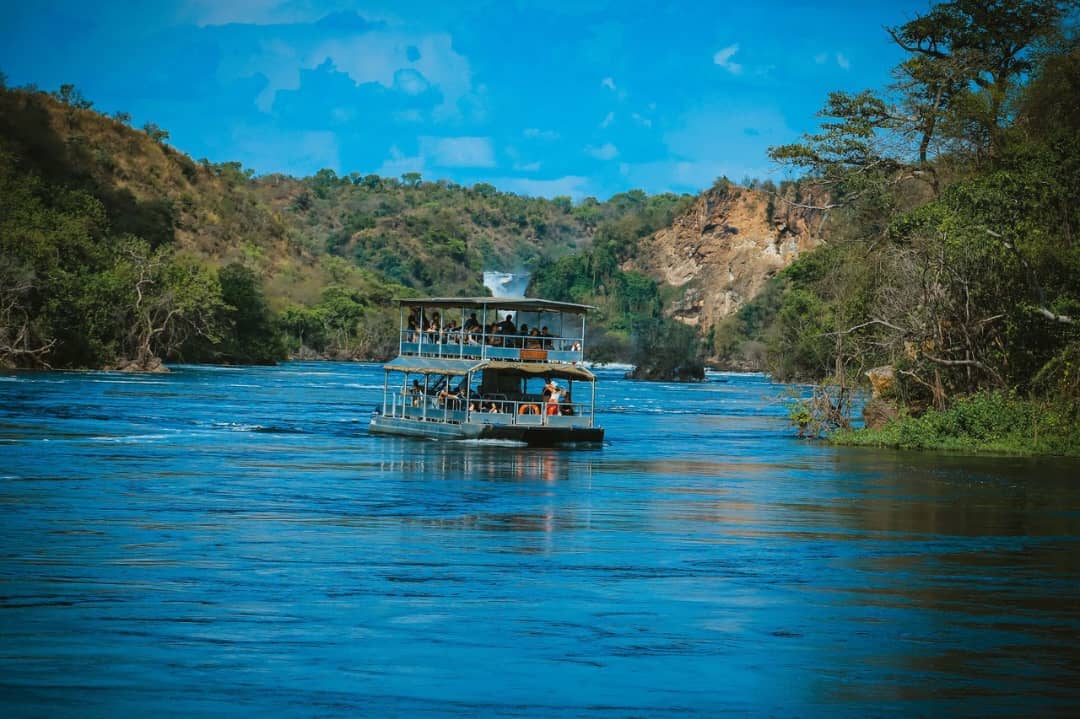
Departure point: Most cruises leave from the Mweya jetty on the Mweya Peninsula. You’ll board a covered vessel with open sides for unobstructed views. Private charters and smaller photographic boats are also available.
Duration: Typically 2 hours. That’s enough to cover a rich stretch of shoreline in each direction at an easy pace with plenty of time for sightings.
Timing:
- Morning (usually 9–11 am): Cooler temperatures, gentle light, active birds.
- Afternoon (typically 3–5 pm): Warmer colours, long shadows, and frequent big-mammal action as herds come to water. It’s a favourite for photographers.
Guiding: A professional guide interprets animal behaviour, bird IDs, and the human history of the fishing villages bordering the waterway. Expect rich storytelling and safety briefings before departure.
When to Go: Seasons & Water Levels
The Kazinga Channel is a year-round destination thanks to its permanent water. That said, each season has a personality:
- Dry seasons (approximately June–August and December–February): Lower vegetation and receding shorelines can concentrate animals even more tightly at the water’s edge. Afternoon light is often crisp with fewer rain clouds.
- Green seasons (approximately March–May and September–November): Lush landscapes, dramatic skies, and superb birding with migrants and breeding plumage. Occasional showers add atmosphere (bring a light rain jacket).
Tip: If your dates are flexible, pair a Kazinga afternoon boat with a Kasenyi Plains morning game drive for lions and other predators, a classic Queen Elizabeth combo.
Photography Tips (Beginner to Enthusiast)
- Lens choices: A 100–400mm (or similar) zoom is ideal from a boat. Pair with a 24–70mm for wide river scenes and elephant families.
- Shutter speed: Keep it high to counter boat movement (start around 1/1000s for birds in flight; 1/500s for large mammals).
- Focus mode: Continuous AF helps with moving subjects; use single-point focus on the eyes when possible.
- Stability: Beanbags or your camera strap wrapped around your arm can add steadiness. Avoid monopods; boats can be crowded.
- Etiquette: Alternate sides when something special appears; everyone will get their turn. Guides will reposition the boat when safe.
People & Place: Life Along the Channel
Several traditional fishing communities neighbour the waterway. On some routes, you may glimpse boats, nets, and lakeside routines that predate the national park itself. Your guide will explain how conservation, tourism, and community livelihoods intersect here an illuminating window into modern conservation in Uganda.
Responsible Travel at Kazinga
- Keep voices low and avoid sudden movements near wildlife.
- Do not feed animals or dispose of litter ever. Even biodegradable scraps alter behaviour.
- Respect no-wake zones and nesting/breeding sites. Your captain will brief you.
- Support community crafts at authorised points; your purchase has a real impact.
Otter African Safaris partners with lodges and community initiatives that prioritise conservation and tangible local benefits.
What to Pack for the Boat
- Light long-sleeve shirt and hat for sun protection
- Sunscreen and sunglasses
- Light rain layer (especially in the green season)
- Binoculars (8x or 10x) for birds and distant subjects
- Camera gear + dry bag or zip pouches
- Refillable water bottle (we encourage plastic-free travel)
How a Kazinga Day Fits Into Your Safari
Classic day plan with Otter African Safaris:
- Sunrise game drive in Kasenyi Plains for lions, kob, and hyena.
- Brunch & rest at your lodge.
- Kazinga Channel boat cruise (afternoon).
- Golden-hour shoreline stop (time allowing) or gentle drive back to camp.
2–3 day Queen Elizabeth add-on:
- Day 1: Arrive, afternoon game drive.
- Day 2: Morning drive + afternoon Kazinga Channel boat.
- Day 3: Transfer south to Ishasha Sector for tree-climbing lions or onward to Bwindi for gorilla trekking.
We tailor transport (road or fly-in), lodges (from boutique to luxury), and private charters for keen photographers or families with kids.
Practical Notes
- Park entry & boat fees: Paid separately; we’ll handle the paperwork in your itinerary. Rates can change ask us to confirm for your dates.
- Minimum age: Family-friendly; younger children are welcome on most shared boats when supervised. Private boats are ideal for naps, snacks, and flexible pacing.
- Accessibility: Boats with easy step-aboard designs are available; let us know any mobility considerations so we can match the right vessel.
Why Go with Otter African Safaris
- Expert sequencing: We optimise your day to balance crowds, light, and wildlife behaviour.
- Right boat, right moment: From shared cruises to private photographic charters, we arrange the vessel that fits your party and goals.
- Naturalist guides: Patient, conservation-minded, and deeply knowledgeable about QENP’s ecology and birdlife.
- Seamless logistics: Flights, transfers, lodges, special diets, and family needs handled.
Ready to Add Kazinga to Your Itinerary?
Whether it’s your first time on safari or your tenth, the Kazinga Channel delivers unforgettable, unhurried wildlife encounters. Tell us your travel window, group size, and interests (photography, family travel, birding, or big-game focus), and we’ll build a Queen Elizabeth National Park experience centred around this remarkable waterway, calm, wild, and perfectly Ugandan.
Contact us: info@otterafricansafaris.com or otterafricansafaris94@gmail.com
Visit: www.otterafricansafaris.com
Call: +256773945555 or +256773932802. #OtterAfricanMagic.