A Safari Guide to Nairobi National Park
April 23, 2026
Where Golden Years Meet Golden Horizons
April 24, 2026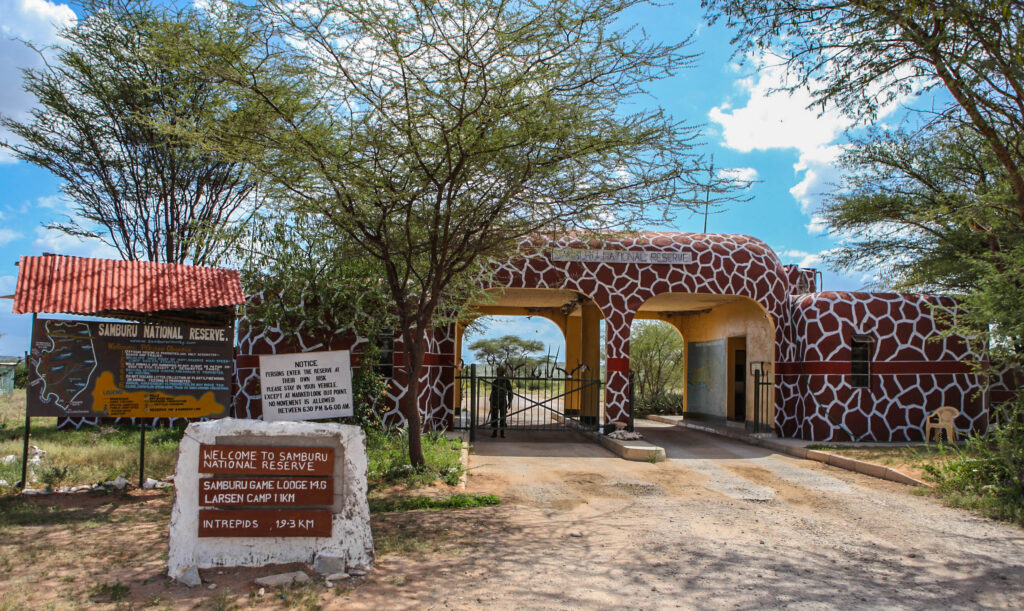
Samburu National Park
The vehicle ground to a halt. Our guide killed the engine without a word, the kind of silence that means look, just look. Ahead of us, not thirty metres away, a reticulated giraffe folded its extraordinary neck toward the Ewaso Ng’iro River, drinking with a grace that seemed impossible for something so large. The afternoon light fell copper and warm. A fish eagle screamed from a fever tree on the far bank. Nobody in the vehicle moved. Nobody breathed.
That is Samburu. That is what happens when you travel north.
Kenya’s Best-Kept Safari Secret: Samburu National Park
When most travellers picture a Kenya safari, they picture the Maasai Mara, the sweeping golden plains, and the great migration thundering through in season. And yes, the Mara is extraordinary. But there is another Kenya, one that fewer visitors discover, one that rewards the curious and the adventurous with something that feels rawer, more ancient, and entirely its own.
Samburu National Reserve, tucked into Kenya’s arid northern frontier, is one of Africa’s most remarkable wildlife destinations. Straddling the banks of the Ewaso Ng’iro River, the lifeblood of this semi-desert landscape, the reserve covers roughly 165 square kilometres of acacia woodland, open savannah, and riverine forest. It is a place of extremes: bone-dry riverbeds and sudden lush greenery, blazing midday heat and shockingly cold star-filled nights.
It is also, for those who come here, utterly unforgettable.
The “Samburu Special Five”: Wildlife Found Nowhere Else on Earth
Ask any safari guide what makes Samburu special, and they will give you the same answer: the Samburu Special Five.
1. The Reticulated Giraffe
The most beautiful of all the giraffe subspecies, arguably. Where the more common Masai giraffe wears irregular, jagged patches, the reticulated giraffe is painted in bold, polygon-shaped chestnut panels divided by clean white lines like stained glass stretched over the tallest neck in the animal kingdom. They move through the acacias of Samburu as if they own them, which, in every practical sense, they do.
2. The Grevy’s Zebra
Bigger than its plains cousin, with enormous ears and narrow, precisely drawn stripes, the Grevy’s zebra is one of the most endangered equids on earth. There are fewer than 3,000 left in the wild, and Samburu is one of the best places in the world to encounter them. Standing beside a herd of Grevy’s watching their bold stripes shimmer in the midday heat is to understand why early explorers struggled to believe what they were seeing.
3. The Somali Ostrich
The male Somali ostrich is unmistakable: while the common ostrich has pink skin on its neck and legs, the Somali ostrich has blue skin. A vivid, improbable blue, the kind of colour you expect to see on a tropical bird, not the world’s largest. Spotting a male in full breeding display, wings fanned, neck flushed deep cerulean, is one of the more surreal wildlife moments Samburu delivers.
4. The Gerenuk
The gerenuk giraffe-gazelle in Somalia is possibly the most curious-looking antelope in Africa. It has the body of a small deer and the neck of an apprentice giraffe, and it uses that neck to do something no other antelope can: stand upright on its hind legs and browse from the highest branches of thornbush, moving through the scrub like a creature from a Dalí painting.
5. The Beisa Oryx
Strikingly beautiful, with long straight horns like lances and a boldly-painted face in black and white, the Beisa oryx is built for the harshest of landscapes. They can survive days without water, extract moisture from desert grasses, and tolerate internal body temperatures that would be lethal to other mammals. In Samburu, they drift across the open plains with a poise that feels almost regal.
The River: Where Everything Comes Together
Every great safari destination has an organising principle, a geographic feature around which the wildlife and the drama of the bush arranges itself. The Mara, it is the open plains. Amboseli, it is Kilimanjaro. Samburu, it is the Ewaso Ng’iro River.
Ewaso Ng’iro means “river of brown water” in the Maa language, and in the dry season, the name makes perfect sense: it runs dark with tannins and sediment, narrowing in places to a thin thread between high banks of sand. But it never stops. And because it never stops, everything comes to it.
Game drives along the river reveal a constantly shifting theatre of wildlife. Nile crocodiles, ancient, indifferent, perfectly camouflaged against the mud, occupy the shallower stretches. Hippos surface and blow in the deeper pools. Elephants come to drink in the late afternoon, filling the air with their rumbling, low conversations. Leopards, more habituated to vehicles than almost anywhere in Kenya, drape themselves across overhanging branches and watch the world below with magnificent indifference.
Dawn on the Ewaso Ng’iro is a particular kind of magic. The light begins as a deep indigo, then rose, then floods suddenly gold across the fever trees and palms. The birds begin before the sun fully clears the horizon: kingfishers, hornbills, the bark of a fish eagle.
The Samburu People: Culture as Part of the Experience
A safari in Samburu is incomplete without understanding the landscape’s human dimension. The Samburu people, semi-nomadic pastoralists who have inhabited this region for centuries, are as much a part of this ecosystem as the giraffe or the oryx.
At Otter African Safaris, we believe meaningful travel includes genuine cultural exchange. A visit to a Samburu village done respectfully and with community benefit at the forefront offers a window into a way of life that has adapted to one of Kenya’s most challenging environments with extraordinary ingenuity.
You will see beautiful beaded jewellery that indicates age, gender, and social position. Then you may hear the warriors’ songs. Then we will depart with the realisation that conservation in northern Kenya is inextricably linked to the well-being of the communities that have long lived here.
Best Time to Visit Samburu National Reserve
Unlike the Maasai Mara, which has a definitive peak season tied to the wildebeest migration, Samburu is a year-round destination, one of its great practical advantages.
July to October brings dry, sunny conditions, excellent road surfaces, and superb game viewing as animals cluster around the river. This is also when the reserve sees its most visitors, so book early.
January to March is another dry season, arguably Samburu’s best-kept secret in terms of timing. The light is extraordinary, the bush is thin and easy to see through, and visitor numbers are lower.
The green seasons (April–June and November) see the landscape transform into something almost lush, with flowers and fresh grass. Birding during these months is spectacular, with migratory species arriving from across the hemisphere. Some lodges offer reduced rates.
Where to Stay: Setting Up Camp in the Northern Frontier
The accommodation options in and around Samburu range from intimate tented camps right on the riverbank, where the sound of hippos provides your night-time soundtrack, to more comfortable lodge options suited to families and those who prefer solid walls. All offer that essential Samburu experience: the feeling of being genuinely remote, genuinely close to the wild.
Our team at Otter African Safaris will match you to the camp or lodge that suits your style, your group, and your budget. Whether you are a first-time safari traveller or a seasoned bush veteran adding Samburu to a long Kenya itinerary, we will build an experience that fits.
Combining Samburu with the Rest of Kenya
Samburu sits in Kenya’s north, which makes it a natural complement to a wider Kenya itinerary. Common combinations include:
- Samburu + Maasai Mara: The classic contrast of arid north meets lush south, the Samburu Special Five meets the Big Five and the migration.
- Samburu + Laikipia Plateau: Kenya’s private conservancy country, home to rhino, wild dog, and some of the continent’s most thoughtful conservation work.
- Samburu + Amboseli: A dramatic double bill, the northern frontier paired with Kilimanjaro views and massive elephant herds in the south.
All of these routes are eminently drivable or accessible by light aircraft, and we at Otter African Safaris specialise in crafting seamless itineraries that extract the most from your time on the ground.
Why Samburu, Why Now
Back at the river, the light is fading. The reticulated giraffe has long since loped away into the acacias. In its place, a herd of elephants has materialised from the scrub, twenty, thirty of them moving to the water’s edge with the unhurried confidence of animals that have done this ten thousand times before. A calf, barely waist-high, stumbles and then rights itself, trunk swinging wildly. The matriarch watches us with ancient, amber eyes, decides we are no threat, and drops her trunk into the brown water.
Samburu is not merely a destination. It is an argument made in the language of wildlife, landscape and light, for the importance of wild places. It is a reminder that somewhere in the world, giraffes still fold their impossible necks to drink from wild rivers, that somewhere, oryx still drift across open plains like legends made flesh.
Go north. The wild is waiting.
Plan Your Samburu Safari with Otter African Safaris
At Otter African Safaris, we have built our reputation on crafting Kenya safaris that go beyond the ordinary, that take our clients somewhere they did not expect, to see something they cannot forget. Samburu is central to that promise.
Our Samburu packages are fully customisable, combining expert guides, hand-picked camps, and seamless logistics so that you arrive in the bush ready to experience it, not worried about the details.
Contact us today to start planning your northern Kenya adventure. Whether you are a solo traveller, a couple celebrating something special, a family introducing children to the wild, or a group of friends ready for an adventure, we will design the safari that finds you at that river, watching the elephants drink, understanding at last what it means to be in Africa.
Contact us: info@otterafricansafaris.com or otterafricansafaris94@gmail.com
Visit: www.otterafricansafaris.com
Call: +256773945555 or +256773932802.
