
Serengeti National Park Tanzania’s crown jewel
April 1, 2026
A Story of Tsavo National Park
April 23, 2026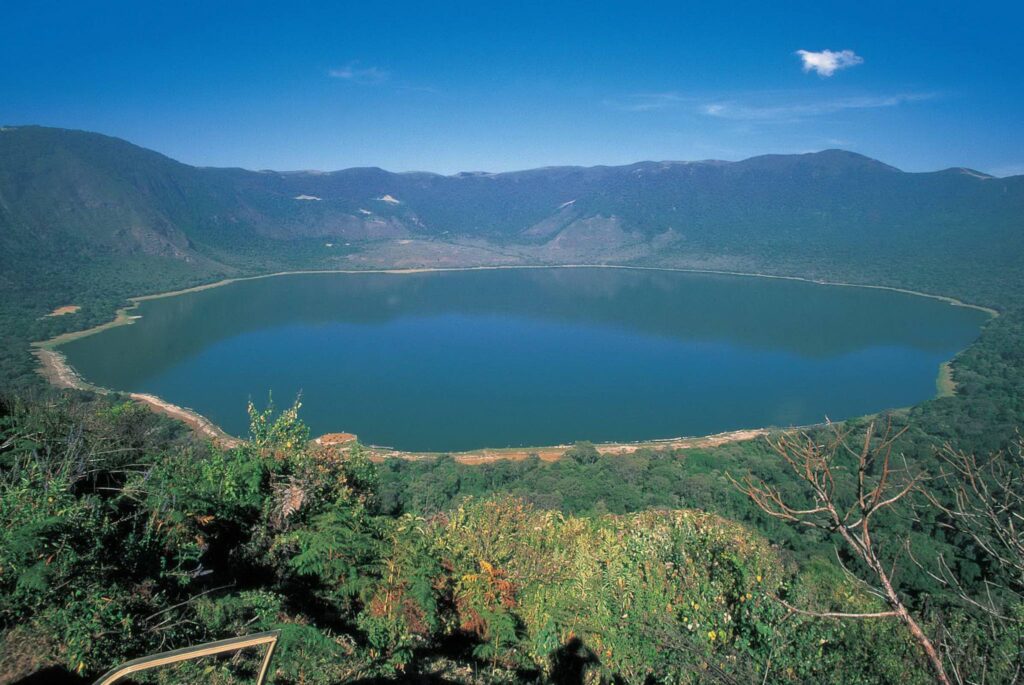
Ngorongoro National Park
There are places on this earth that stop you mid-breath. Ngorongoro Crater is one of them. Standing on the rim at dawn, a blanket of mist still curled in the basin below, watching the African sun ignite the grasslands 600 metres beneath your feet, this is the moment you understand why travellers have called Ngorongoro one of the greatest wildlife spectacles on the planet. At Otter African Safaris, we believe no safari to Tanzania is complete without descending into this extraordinary world.
Formally known as part of the Ngorongoro Conservation Area, a UNESCO World Heritage Site since 1979, this destination is not merely a national park but an entire ecosystem unto itself. It is also one of the few places in Africa where you can witness Maasai pastoralists herding their cattle within sight of lion prides at rest. The ancient and the wild, side by side.
The Crater Born From Fire, Now Alive with Life
Ngorongoro was once a towering volcano, estimated to have rivalled Kilimanjaro in height before it collapsed in on itself some two to three million years ago. The result was the world’s largest intact volcanic caldera, a near-perfect natural amphitheatre roughly 19 kilometres across. The crater walls act as a natural enclosure, creating a micro-ecosystem with its own lakes, rivers, forests, and open savannah.
The floor hosts one of the densest concentrations of wildlife anywhere in Africa. Permanent water sources, including the shallow, soda-rich Lake Magadi at the crater’s heart, ensure animals have little reason to leave. This is what makes Ngorongoro so exceptional: in most African parks, wildlife disperses across thousands of kilometres. Here, the curtain never closes. The drama plays out every single day, in every season, with extraordinary reliability.
“Descending into Ngorongoro is like entering another world, one that existed long before us and, with care, will outlast us all.”
Wildlife: The Bug Five and So Much More
Ngorongoro Crater is one of the finest locations in Africa to encounter the Big Five: lion, elephant, Cape buffalo, leopard, and black rhinoceros within a single game drive. The rhinoceros in particular draws significant attention: Ngorongoro is among the last strongholds for the critically endangered black rhino in East Africa, and sightings here are among the most reliable on the continent.
Black Rhinoceros
One of Africa’s last viable black rhino populations. Early morning drives give your best chance of a sighting near the Lerai Forest edge.
African Lion
Crater lions are famous for their dark manes, likely from the cooler temperatures at altitude. Prides are large and remarkably relaxed around vehicles.
Elephant
Large-tusked bull elephants frequent the crater floor. Some of the longest tusks recorded in Tanzania have been photographed here.
Flamingo
Thousands of lesser and greater flamingos wade in the soda shallows of Lake Magadi, painting the water pink on calm mornings.
Wildebeest & Zebra
Unlike the Serengeti, Ngorongoro’s resident herds never migrate. You will encounter them year-round, often in their thousands.
Spotted Hyena
Ngorongoro has one of the world’s highest hyena densities. Watching a clan work together at dawn is a safari highlight in itself.
Leopard, cheetah, golden jackal, serval, bat-eared fox, and over 500 recorded bird species round out the biodiversity of this remarkable arena. Birdwatchers will be particularly rewarded near the Lerai Forest and along the hippo pools, where the variety and volume of species can be staggering.
The Maasai: Guardians of The Crater Rim
What sets Ngorongoro apart from many other protected areas is its status as a multiple-use conservation area. The Maasai people have coexisted with the wildlife here for centuries, and their presence is not incidental; it is integral to the character of the landscape.
The semi-nomadic Maasai are permitted to graze their cattle on the crater rim and in designated areas within the Conservation Area, though not on the crater floor itself. Visiting a traditional Maasai boma (village) near the crater rim is an experience Otter African Safaris strongly recommends. You will be welcomed with song, offered a glimpse into their extraordinary culture, and gain a deeper understanding of how ancient traditions have survived in the shadow of one of the world’s most visited natural wonders.
Otter Safari Insight
Ask your Otter guide to arrange a visit to a Maasai boma at sunset on your rim-night stay. The light, the chanting, and the silhouette of the crater behind you make for an unforgettable and deeply humbling experience.
When To Visit: A Year-Round Destination
One of Ngorongoro’s greatest advantages as a safari destination is that wildlife viewing remains excellent throughout the year. Because the crater’s resident animals do not migrate, you are never at risk of arriving at an empty landscape. That said, the quality and character of your experience do shift with the seasons.
|
Season |
Months |
Conditions |
Rating |
|---|---|---|---|
| Dry season | June – October | Clear skies, sparse vegetation, excellent game viewing, cooler nights on the rim | Peak |
| Short rains | November – December | Brief afternoon showers, lush green crater floor, calving season begins, fewer tourists | Very Good |
| Long rains | March – May | Heavier rainfall, dramatic skies, excellent birding, lower prices, and some tracks may be slippery | Quiet Season |
| Shoulder | January – February | Warm and dry, wildebeest calving on the Ndutu plains nearby, good crater access | Very Good |
If you are combining Ngorongoro with the Serengeti Great Migration, which we highly recommend, January and February align perfectly with the calving season on the short-grass Ndutu plains at the southern boundary of the Serengeti, just an hour’s drive from the crater. June through October pairs Ngorongoro with the dramatic river crossings in the northern Serengeti.
How to Experience Ngorongoro: The Otter Way
There is only one road descending into Ngorongoro Crater, and the Conservation Authority limits the number of vehicles permitted on the floor each day. This makes logistics and choosing the right safari partner absolutely critical. At Otter African Safaris, we plan your descent meticulously, ensuring early entry so you reach the crater floor ahead of the crowds, often while morning mist still hangs in the valleys and predators are still active after a night’s hunt.
Staying on the Crater rim
We recommend at least two nights based on the crater rim. The experience of waking at altitude, watching the clouds below you burn away as the sun rises, is one of the most extraordinary morning rituals in all of Africa. Rim lodges offer sweeping views directly into the caldera and some of the finest stargazing on the continent once the sun sets.
Private Game Drives
Otter African Safaris operates exclusively in private 4×4 safari vehicles, never shared with strangers. Your vehicle is yours alone, meaning your guide can position it for the best photographic angles, linger at sightings for as long as you desire, and tailor the entire game drive around your interests. This is non-negotiable for us: the crater experience should feel intimate, not like a bus tour.
Combining with wider Tanzania
Ngorongoro sits naturally within a wider northern Tanzania circuit. We regularly combine it with the Serengeti, the lesser-known Tarangire National Park (home to Tanzania’s largest elephant herds), the birdlife of Lake Manyara, and cultural experiences in nearby Karatu. A classic eight-to-twelve-day itinerary allows you to experience all of these extraordinary destinations without feeling rushed.
Otter Packing Tip
The crater rim sits at approximately 2,300 metres above sea level. Mornings and evenings can be genuinely cold, sometimes dropping below 10°C. Pack a warm fleece and a waterproof layer regardless of what time of year you travel.
Conservation and Responsible Safari Travel
Ngorongoro Conservation Area is one of Africa’s most carefully managed protected landscapes, but it faces real pressures from tourism growth, climate variability, and the challenges of balancing the needs of Maasai communities with wildlife conservation. Otter African Safaris takes its responsibility in this ecosystem seriously.
We operate according to strict low-impact safari principles: we never encourage off-road driving, we support guides who prioritise animal welfare over photography pressure, and we actively contribute to conservation levies. We also partner with community projects on the crater rim, ensuring that a portion of every safari booked through us returns directly to the people who live alongside these extraordinary animals.
When you travel with Otter African Safaris to Ngorongoro, you are not just a visitor. You are part of the conservation story.
Begin Planning Your Ngorongoro Safari
Ngorongoro Crater does not simply meet expectations. It demolishes them. The scale of it, the silence on the rim at dawn, the sheer improbability of so much wildlife gathered in one volcanic bowl, these are experiences that stay with you for decades. They are the reason people who have been once inevitably start planning their return before their plane has even landed home.
Our team at Otter African Safaris has been crafting deeply personal Tanzania safaris for years. We know which rim lodges offer the most breathtaking views, which guides can read lion body language like a language they were born speaking, and how to structure your days in the crater so you are there when the light and the animals conspire to create something genuinely unforgettable.
Ngorongoro is waiting. Let us take you there.
Read to Descend into the Crater?
Our safari specialists are on hand to design your perfect Ngorongoro itinerary, completely personal, completely private.
Contact us: info@otterafricansafaris.com or otterafricansafaris94@gmail.com
Visit: www.otterafricansafaris.com
Call: +256773945555 or +256773932802.
