
A Complete Guide to Lake Mburo National Park
March 29, 2026
Ngorongoro Crater The Eighth Wonder of the Natural World
April 1, 2026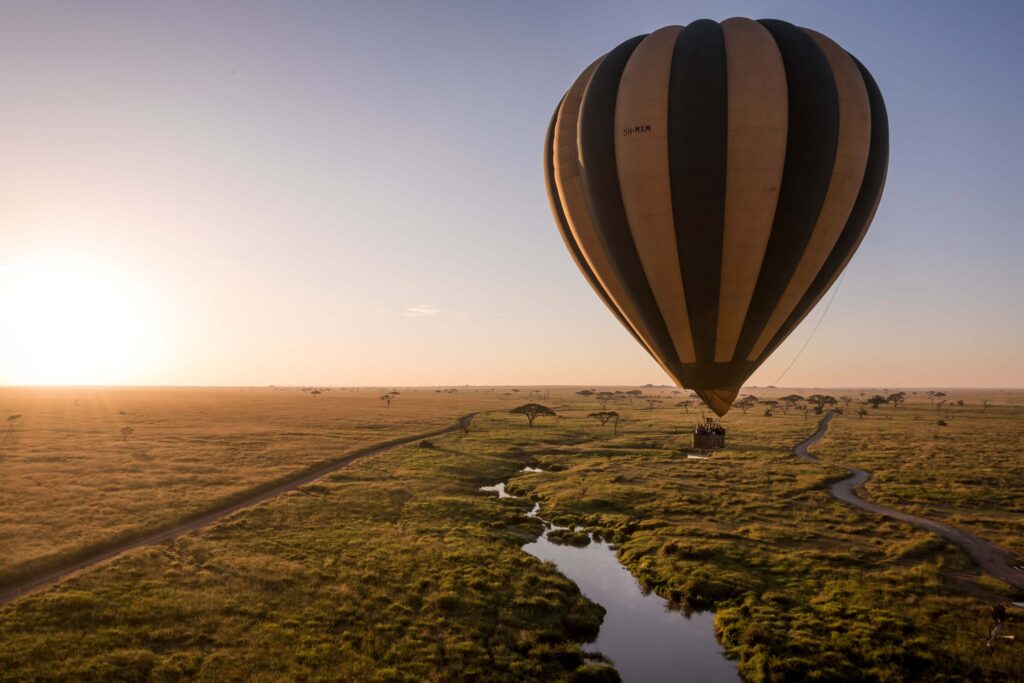
Serengeti National Park
There are locations on our planet that transform you rather than only impressing you. Among them is the Serengeti. You won’t need an explanation to comprehend why this place has enthralled explorers, scientists, and visionaries for ages once you set foot on its ancient plains.
Stretching across 14,763 square kilometres of northern Tanzania, the Serengeti is the world’s oldest and most scientifically significant ecosystem. Its name comes from the Maasai word Siringet, meaning “the place where the land runs on forever”, and when you stand at the edge of the Seronera Valley at golden hour, watching zebra scatter across a grass plain that dissolves into the horizon, you’ll understand exactly why that name stuck.
For Otter African Safaris, the Serengeti isn’t just a destination. It’s a relationship. We’ve been bringing travellers to these plains for years, and we can tell you with certainty: no two visits are ever the same. The ecosystem is alive, evolving, unpredictable, and that’s precisely what makes it extraordinary.
The Great Migration
If you’ve heard of one thing about the Serengeti, it’s likely the Great Migration and the hype, for once, is entirely deserved. Every year, over 1.5 million wildebeest, accompanied by hundreds of thousands of zebra and gazelle, make a continuous circular journey across the Serengeti-Mara ecosystem in search of fresh grazing. This is not a seasonal spectacle; it’s a year-round phenomenon, and knowing where to be and when is what separates a good safari from a truly life-defining one.
From January to March, the herds gather on the short-grass plains of the southern Serengeti and the Ndutu area, a period that coincides with the calving season. Up to 8,000 wildebeest calves are born every single day during peak weeks. It is extraordinary, chaotic, and deeply moving. Our expert guides know these plains intimately and position you exactly where the drama unfolds.
By June and July, the migration shifts north toward the Western Corridor and the Grumeti River, where massive Nile crocodiles lie in wait. Come August and September, the herds push further north to the Mara River, the scene of the iconic river crossings, arguably the single most dramatic wildlife event on the planet. Thousands of wildebeest plunge into croc-infested waters in a frenzied, thundering surge. It is terrifying and magnificent in equal measure.
Wildebeest herds stretch to the horizon, a sight that has remained unchanged for millennia.
The Serengeti does not perform for you. It simply exists, in all its ancient, indifferent power, and somehow, that makes it feel more sacred than anywhere else on earth.
Otter African Safaris Field Journal
Big Five and Beyond
The Serengeti is one of the premier Big Five destinations in Africa, and unlike some parks where sightings require hours of searching, the density of wildlife here means encounters are frequent, often multiple times a day. Lions are everywhere, and the Seronera Valley is considered one of the best places on the continent to see them. Prides of up to 20 individuals lounge in acacia trees, stalk through long grass, and raise their cubs in full view of fortunate game-drive vehicles.
Leopards are perhaps the most sought-after sighting, and the Serengeti doesn’t disappoint, particularly around the rocky kopjes and riverine forests of the central and western zones. Elephant herds move through the northern Serengeti in impressive numbers, while buffalo gather in enormous herds on the open plains. As for rhinoceros, Grumeti Reserves and specific conservancy areas maintain protected populations, your Otter Safaris guide will know exactly where to look.
But limiting your focus to the Big Five would be to miss so much of what makes this ecosystem special. Cheetahs are famously well-spotted on the Seronera plains, using termite mounds as lookout posts. Wild dogs, one of Africa’s most endangered predators, make occasional, thrilling appearances.
Planning Your Serengeti Safari
The beauty of the Serengeti is that there is truly no bad time to visit, but the experience shifts dramatically depending on the season. The dry season (June to October) is the classic safari period: sparse vegetation makes wildlife easier to spot, animals congregate around water sources, and the weather is reliably clear. This is also peak season for the river crossings.
The wet season (November to May) transforms the landscape into a lush, impossibly green canvas. The southern plains fill with newborn wildlife during calving season, and the birding is phenomenal as migratory species arrive from Europe and Asia. Fewer visitors, lower rates, and a rawer, more intimate fee,l many of our most loyal clients now specifically prefer the green season.
Migration Calendar
Jan – Mar
Calving season on the southern plains; extraordinary predator action around Ndutu.
Peak action
Apr – May
Long rains; herds begin a northward trek; lush green scenery.
Green season
Jun – Jul
Western Corridor crossings; Grumeti River crocs; dry season begins.
Excellent
Aug – Oct
Mara River crossings in full force; northern Serengeti & Masai Mara border.
Peak season
Nov – Dec
Short rains; herds return south; great birding; fewer crowds.
Green season
Why Safari With Otter African Safaris?
We design every Serengeti safari individually. Whether you’re travelling as a couple on your honeymoon, a family introducing children to wild Africa for the first time, or a photographer in pursuit of the perfect light, we craft an itinerary that fits you, not a template. Small groups, exclusive vehicles, flexible start times, and guides who listen: that’s the Otter way.
The Serengeti will be there. The question is how you experience it. Give us the privilege of showing it to you properly with the depth, the context, and the quiet wonder it deserves.
Your Serengeti Safari Starts Here
Tell us when you want to travel, and we’ll craft a bespoke itinerary, no templates, no crowds, no compromise.
Contact us: info@otterafricansafaris.com or otterafricansafaris94@gmail.com
Visit: www.otterafricansafaris.com
Call: +256773945555 or +256773932802.
