
Why an East African Wildlife Experience Stays in Memory Longer Than City Vacations
June 16, 2026
Biggest Safari Misconceptions What Nobody Tells You Before You Go
June 17, 2026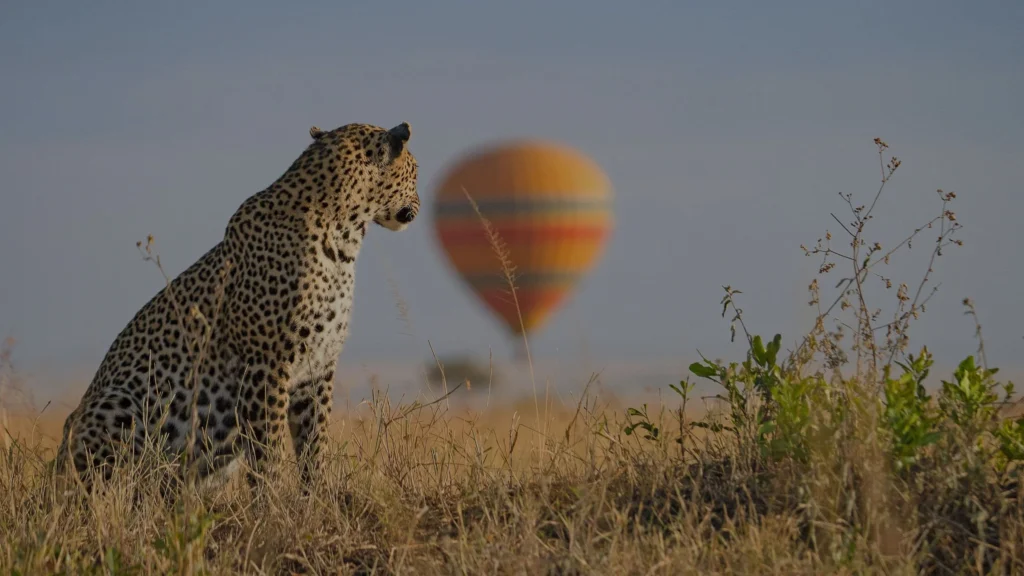
The Most Difficult Animals to Spot on a Safari
The Land Cruiser rolls to a stop on a dust track somewhere between the Serengeti’s golden plains and the deep green of Tanzania’s riverine forest. Your guide kills the engine. Silence rushes in, broken only by the tick of cooling metal and the distant complaint of a hornbill. He points to a smudge of grass thirty meters off, says nothing for a long moment, then whispers, “There. Do you see it?”
You don’t. Not yet. And that, more than any lion kill or thundering wildebeest crossing, is the moment that defines a great East African safari: the hunt for the animal that does not want to be found.
Most first-time safari-goers picture Africa’s wildlife the way nature documentaries sell it: herds parading across open savannah, perfectly lit, perfectly visible. The reality is far more interesting.
The Leopard: Africa’s Master of Camouflage
If there’s one animal that turns seasoned safari guides into nervous, fidgeting novices again, it’s the leopard.
Leopards also hunt mostly between dusk and dawn, resting through the heat of the day draped across a high branch, often with a half-eaten impala wedged in the fork above them, out of reach of hyenas and lions. This habit of “treeing” their kills means you’re often looking up, not out, scanning canopies rather than grasslands, a habit that takes most visitors a few days to develop. Spend time in the Maasai Mara, Serengeti, or along the Mara River’s wooded banks, and you start to understand why local guides develop an almost supernatural ability to spot a tail flicking in foliage from a hundred meters away.
The Aardvark: A Ghost That Works the Night Shift
Ask any veteran safari guide what animal they’d most love to see, and many will say the aardvark before they say anything more famous. This odd, long-snouted termite-eater is almost entirely nocturnal, spending daylight hours sealed inside burrows it digs with startling speed and strength. It emerges only after dark to hoover up ants and termites with a sticky, foot-long tongue, then vanishes underground again before the sun threatens to appear.
The Pangolin: East Africa’s Most Elusive Mammal
If the aardvark is rare, the pangolin is close to mythical. This scaled, ant-eating mammal, the only mammal in the world covered in keratin scales rather than fur, has become a symbol of just how secretive wildlife can be. Pangolins are shy, slow-moving, almost entirely nocturnal, and instinctively curl into a tight, armoured ball at the first hint of danger rather than fleeing, which makes them even easier to miss in long grass or leaf litter.
Decades of illegal trafficking, driven by demand for their scales, have pushed pangolin populations into sharp decline across the continent, making sightings rarer still. Spotting one today isn’t just thrilling, it’s a genuine privilege, and a quiet reminder of why responsible, conservation-minded tourism matters so much to the future of East Africa’s wild spaces.
The Serval and the African Wild Cat: Small, Swift, and Easily Mistaken
The serval, with its tall ears and long legs built for pouncing on rodents in tall grass, moves through the savannah like a flicker at the edge of vision. Its slender frame and habit of freezing motionless the instant it senses a vehicle make it one of the trickiest cats to photograph, let alone spot first. Both species are most active around dawn and dusk, and throughout the night, narrowing the daylight window even further.
Why “Hard to Spot” Often Means “Worth the Wait”
There’s a pattern running through nearly every elusive species in East Africa, and understanding it changes how you safari. Nocturnal habits, solitary behaviour, dense or patterned camouflage, and genuinely low population densities all conspire to keep these animals away from casual view. They aren’t hiding from you specifically; they’re behaving exactly as millions of years of evolution designed them to, avoiding predators and conserving energy in landscapes where being seen can mean being eaten.
This is precisely why the guide matters as much as the destination. A great guide isn’t simply driving you to where animals are known to be; they’re reading fresh tracks pressed into red dirt, noticing the particular alarm call of a vervet monkey that signals a leopard nearby, and recognising which fig tree, heavy with fruit, might be hosting a feeding pangolin or a roosting genet after dark.
At Otter African Safaris, we believe the rarest sightings shouldn’t be left entirely to chance.
A safari built around easy, guaranteed sightings will always exist.
Ready to chase East Africa’s most elusive wildlife with guides who know exactly where to look? Get in touch with Otter African Safaris and let’s plan a journey built around discovery, not just sightings.
Contact us: info@otterafricansafaris.com or otterafricansafaris94@gmail.com
Visit: www.otterafricansafaris.com
Call: +256773945555 or +256773932802.
